Scientific computing & simulation
Numerical solvers, FEM studies, optimisation and surrogate models for engineering and research teams.
PriceContact me
- Formulation and verification
- Parameter studies
- Technical report
Mathematical models, numerical solvers, simulations and optimisation — verified and documented.
Numerical methods, simulation and optimisation for engineering teams and researchers. I take a problem from its mathematical formulation to a verified, documented implementation in Python, C++ or MATLAB, and build simulation studies with finite element tools such as COMSOL and Abaqus. Where full simulations are too slow, I build surrogate models — and state clearly where they stop being reliable.
Scientific Computing
Efficient, verified numerical software for science and engineering.
Numerical analysis
Choosing stable, accurate methods and quantifying their error.
Mathematical modelling
Turning physical or business processes into solvable models.
Computational simulations
FEM and multiphysics studies with COMSOL, Abaqus or custom solvers.
Numerical optimisation
Convex, nonlinear and model-predictive optimisation.
Engineering calculations
Reliable, documented calculation tools that replace fragile spreadsheets.
Research-oriented software tools
Reproducible research code, packaging and documentation.
Prices are not published on this site. Contact me with your requirements and you receive a written proposal with scope, timeline and price.
Numerical solvers, FEM studies, optimisation and surrogate models for engineering and research teams.
PriceContact me
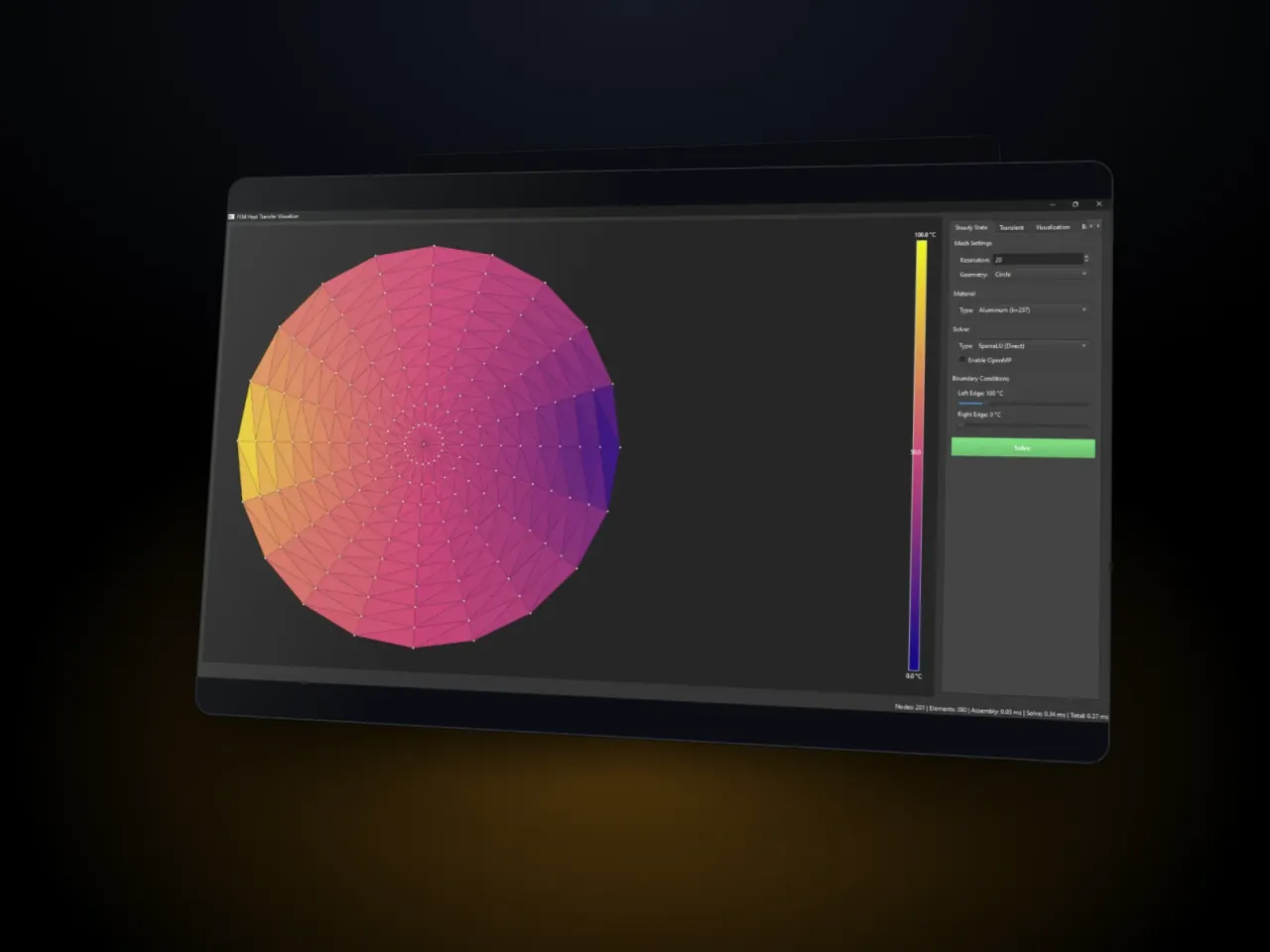
A C++20 finite element solver for 2D steady and transient heat conduction with nonlinear materials, parallel assembly and an interactive Qt interface.
4.2× faster assembly with OpenMP on a quad-core machine for meshes above 5,000 nodes.
View details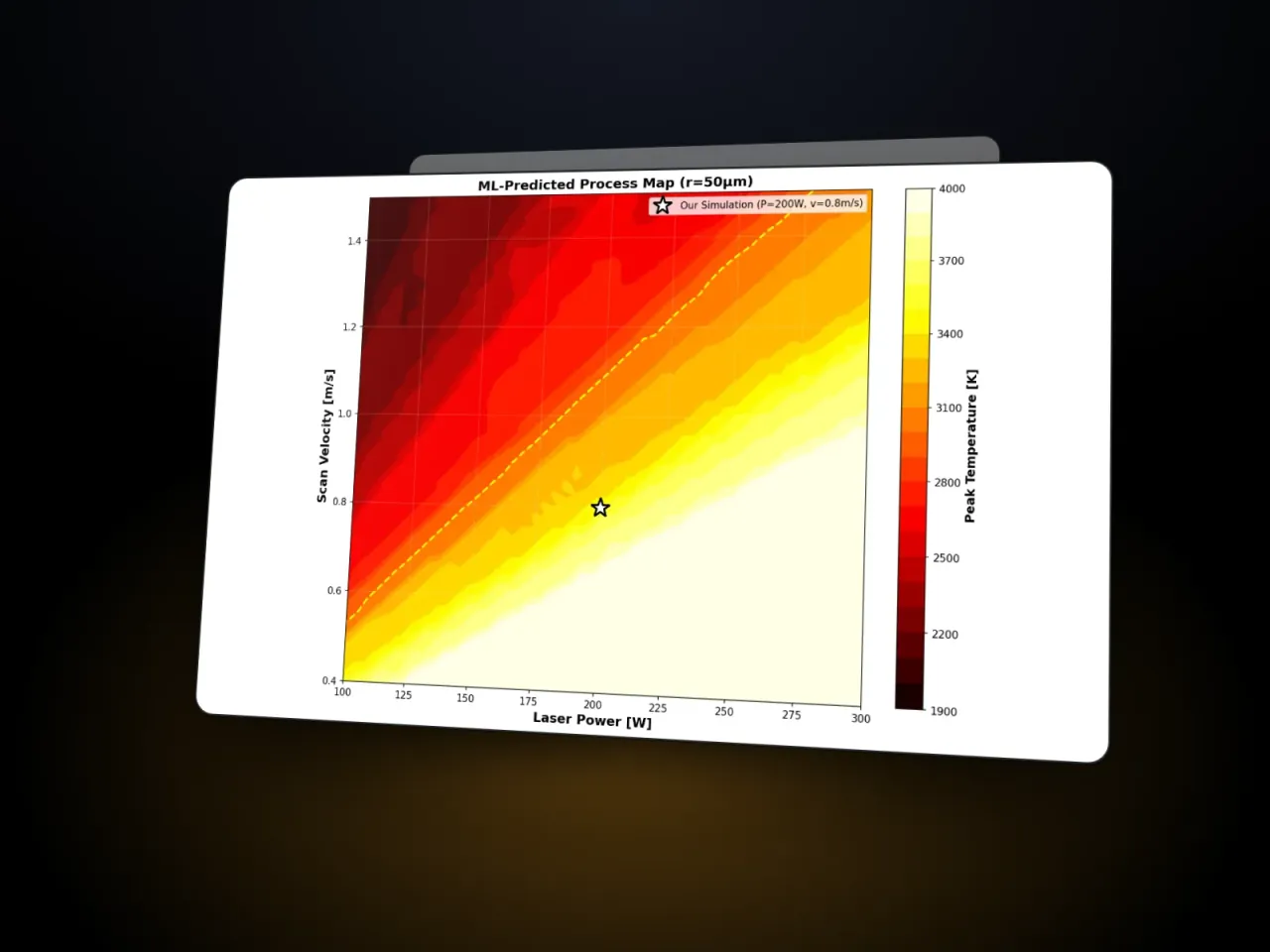
COMSOL models of laser powder bed fusion for Inconel 718, plus a machine-learning surrogate for fast exploration — with its limits stated plainly.
The 3D model predicts a peak temperature of 3,452 K — keyhole regime; the 2D model underestimates it by about 30% and misclassifies the regime.
View details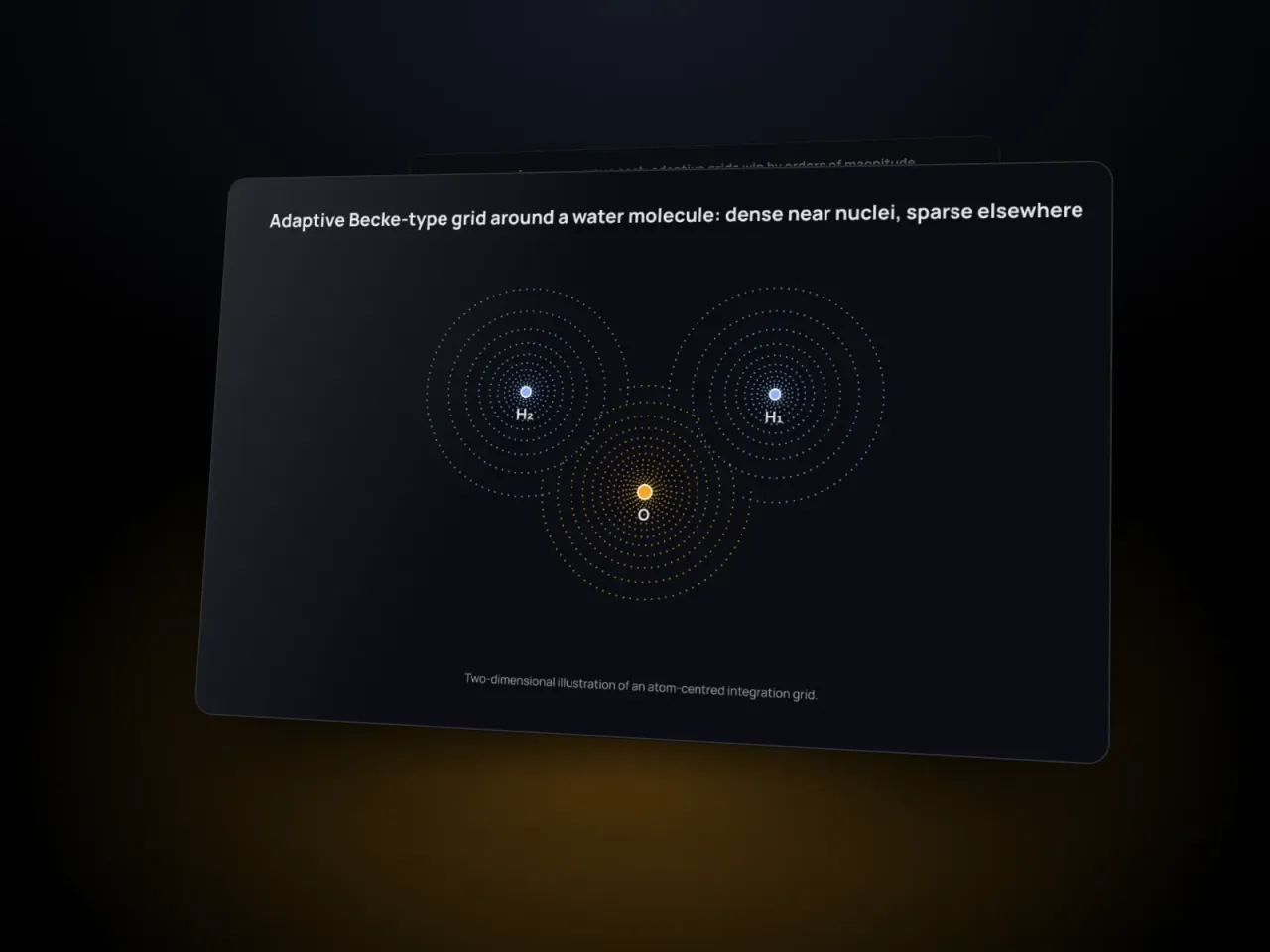
Computing a core quantum-chemistry bottleneck with non-uniform FFTs on adaptive grids — far more accurate with far fewer points.
NUFFT on Becke grids: relative error 4.54 × 10⁻⁶ with 7,760 grid points.
View detailsNo. Commercial software licences must be provided by the client. Where possible, I can also work with open-source tools.
Yes — as software, numerical methods and simulation support for researchers. Academic integrity applies: I do not write theses or assignments on anyone’s behalf.
Python for flexibility and fast development, C++ where performance matters, and MATLAB where your team already works in it. The choice is explained in the proposal.

Share what you need. You will receive questions, an approach and a quote — no obligation.