Skip to content
Mehdi Hassanbeigi
Scientific Computing2025Verified

Finite Element Heat Transfer Solver

A C++20 finite element solver for 2D steady and transient heat conduction with nonlinear materials, parallel assembly and an interactive Qt interface.

Finite Element Heat Transfer Solver

Problem

Heat-transfer analysis needs accurate and fast solvers, and an interface that lets engineers change parameters and see the effect immediately.

Technical solution

Galerkin discretisation with linear triangular elements on rectangular, circular and L-shaped meshes; Dirichlet, Neumann and convection boundary conditions; θ-method time integration (explicit, Crank–Nicolson and implicit); Newton–Raphson iteration for temperature-dependent conductivity; direct and iterative sparse solvers (SparseLU, CG, BiCGSTAB) with Eigen; OpenMP-parallel assembly; and Qt visualisation with scientific colour maps.

My contribution

Sole author: problem definition, implementation, experiments, evaluation and documentation.

Challenges

Parallel assembly without race conditions, convergence of the nonlinear iterations, and verification against analytical solutions.

Results

  • 4.2× faster assembly with OpenMP on a quad-core machine for meshes above 5,000 nodes.
  • Steady-state results verified against analytical solutions in automated tests.
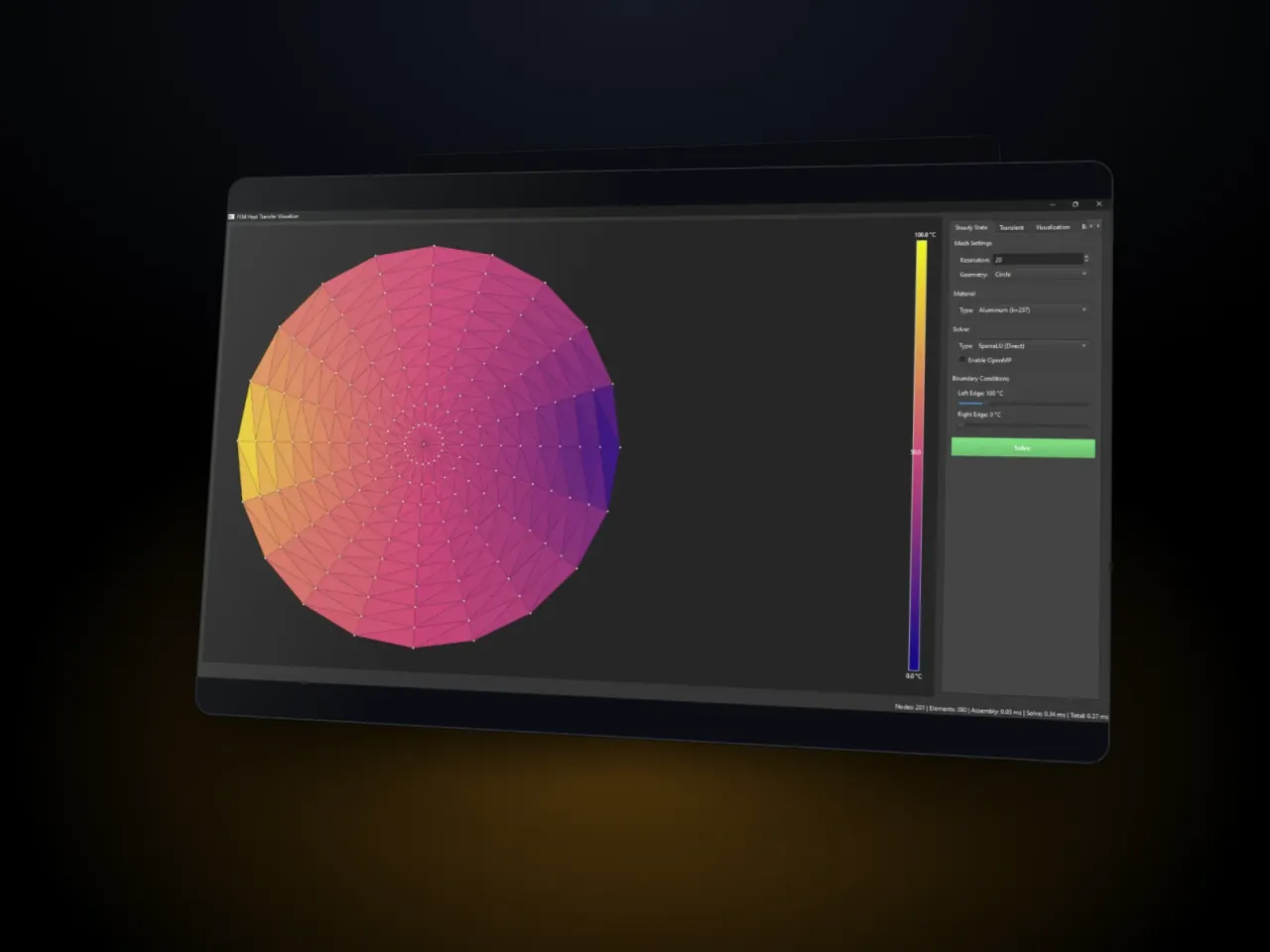
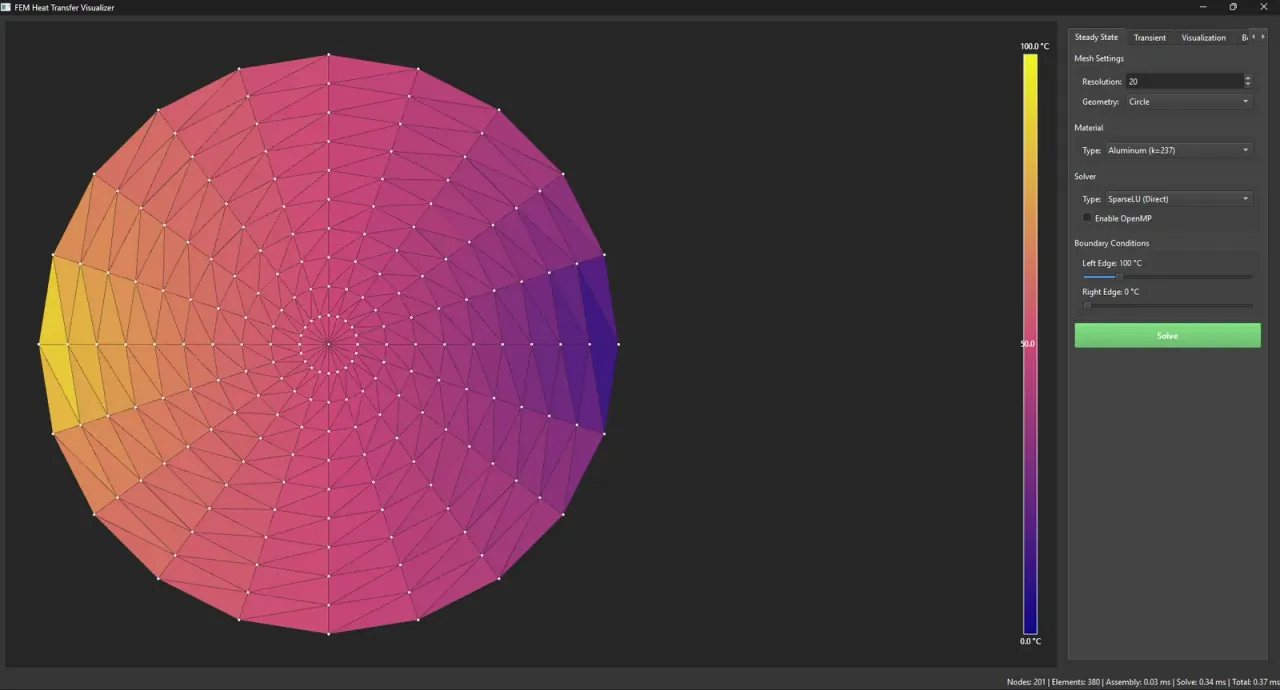
Transient temperature field on a circular mesh
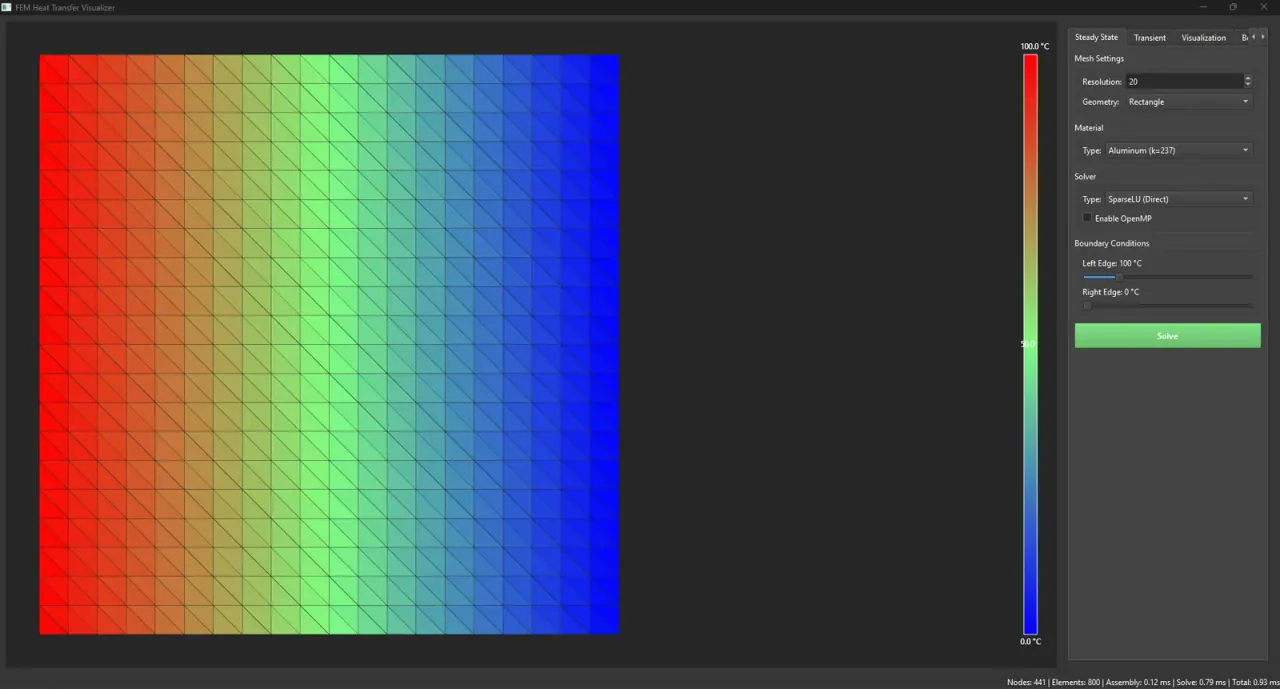
Steady-state temperature distribution on a rectangular domain

More projects

LPBF Melt Pool Simulation and ML Surrogate

Scientific Computing2025

LPBF Melt Pool Simulation and ML Surrogate

COMSOL models of laser powder bed fusion for Inconel 718, plus a machine-learning surrogate for fast exploration — with its limits stated plainly.

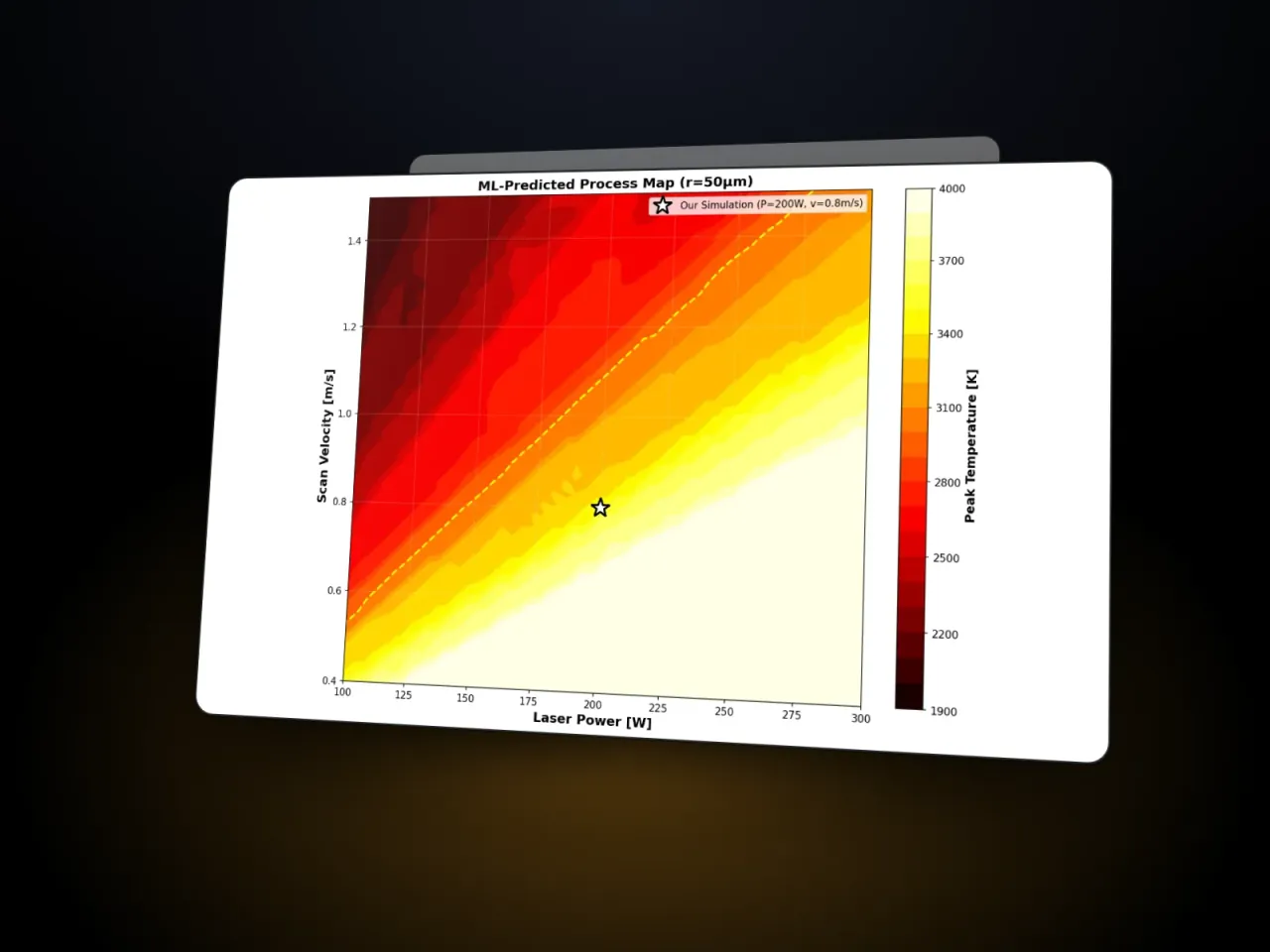
The 3D model predicts a peak temperature of 3,452 K — keyhole regime; the 2D model underestimates it by about 30% and misclassifies the regime.

View details
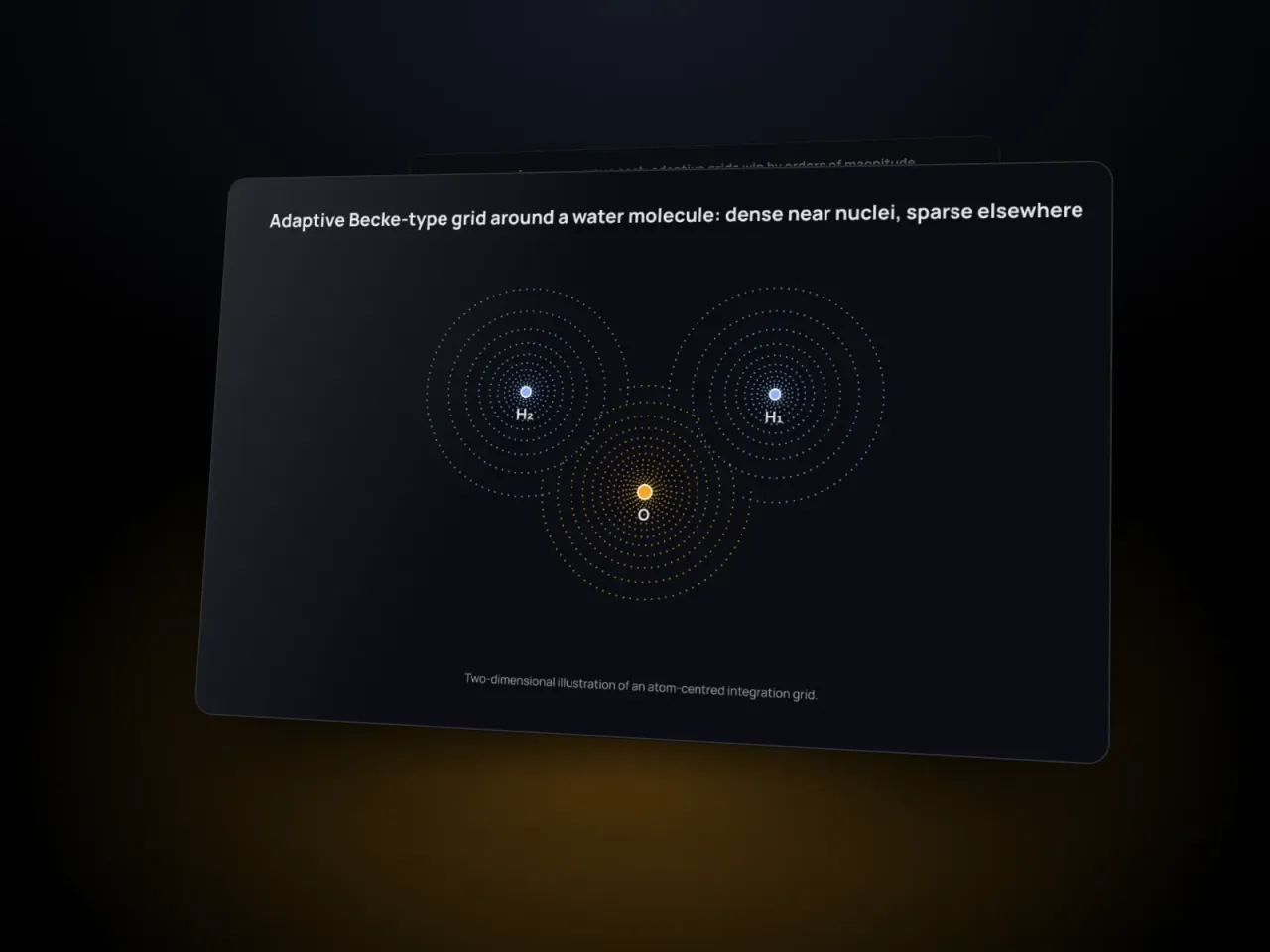
NUFFT for Two-Electron Repulsion Integrals

Scientific Computing

NUFFT for Two-Electron Repulsion Integrals

Computing a core quantum-chemistry bottleneck with non-uniform FFTs on adaptive grids — far more accurate with far fewer points.

NUFFT on Becke grids: relative error 4.54 × 10⁻⁶ with 7,760 grid points.

View details
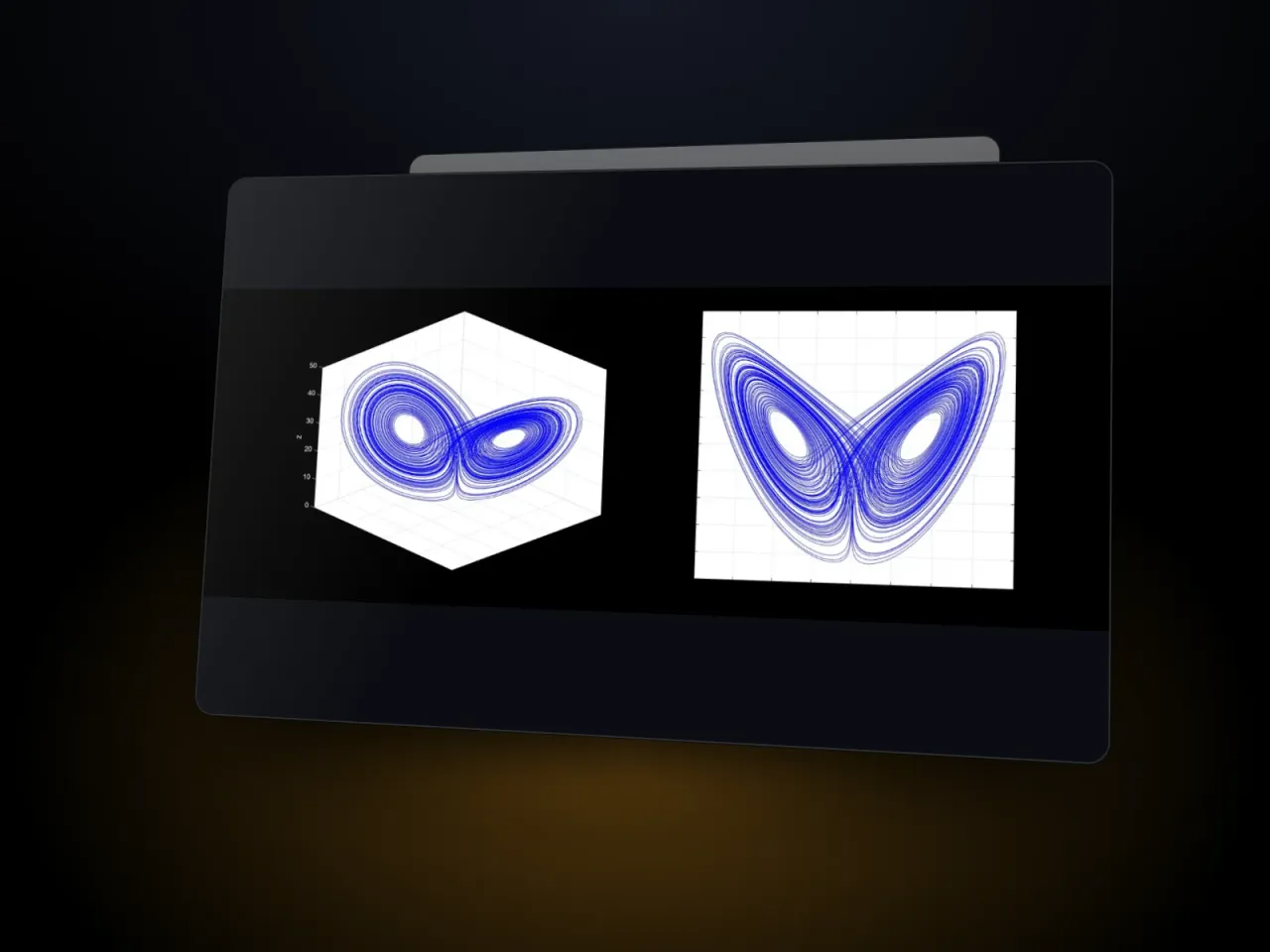
Data Assimilation, Climate and Ecological Dynamics

Scientific Computing

Data Assimilation, Climate and Ecological Dynamics

Three MATLAB studies of nonlinear dynamical systems: data assimilation for the chaotic Lorenz system, bistability in an energy-balance climate model, and integrator accuracy for predator–prey dynamics.

Data assimilation tracks the Lorenz system with over 99% correlation despite chaos.

View details

Let’s scope your project

Share what you need. You will receive questions, an approach and a quote — no obligation.