
Skip to content
Mehdi Hassanbeigi
Scientific ComputingVerified

Data Assimilation, Climate and Ecological Dynamics

Three MATLAB studies of nonlinear dynamical systems: data assimilation for the chaotic Lorenz system, bistability in an energy-balance climate model, and integrator accuracy for predator–prey dynamics.

Data Assimilation, Climate and Ecological Dynamics

Problem

Chaotic and nonlinear systems challenge forecasting and numerical integration: small errors grow quickly, and the wrong integrator can destroy conserved quantities.

Technical solution

Kalman-type and optimal-interpolation assimilation of noisy observations into the Lorenz system; an energy-balance model exploring tipping points and hysteresis; and a comparison of explicit Euler and fourth-order Runge–Kutta integration for Lotka–Volterra dynamics.

My contribution

Sole author: problem definition, implementation, experiments, evaluation and documentation.

Challenges

Choosing assimilation parameters for a chaotic system and quantifying long-time integration error.

Results

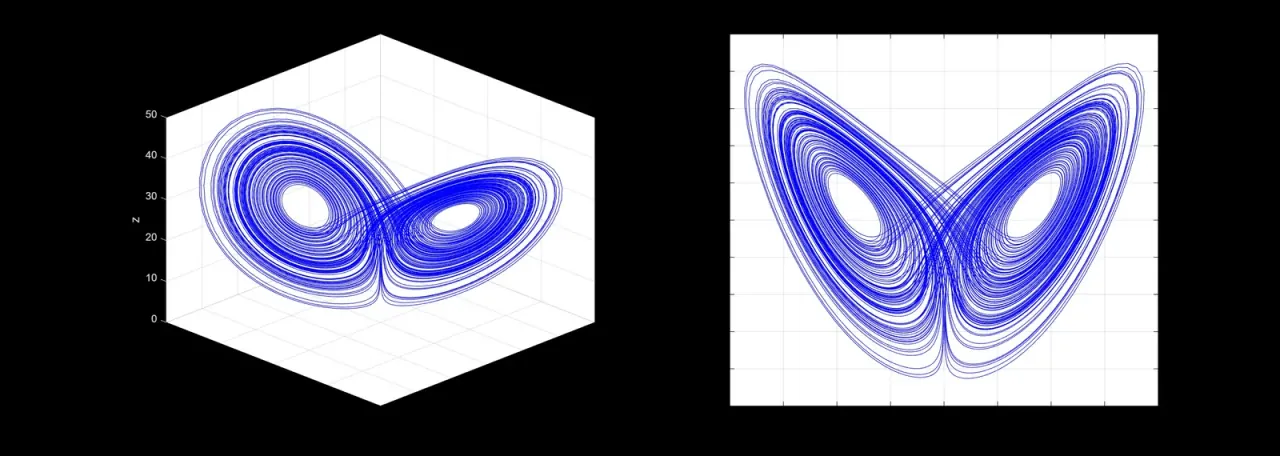
  • Data assimilation tracks the Lorenz system with over 99% correlation despite chaos.
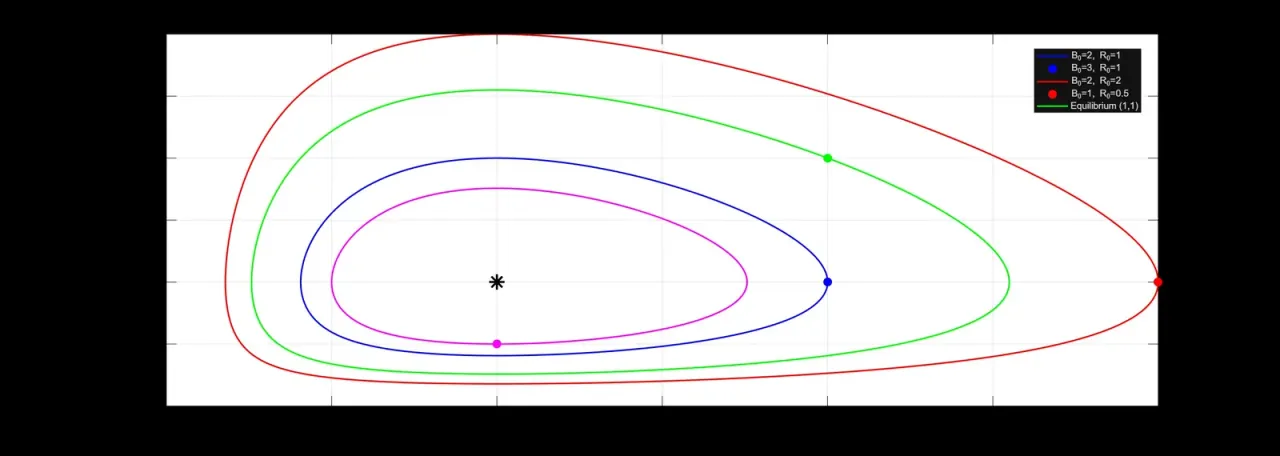
  • The climate model shows two stable states, at about 234 K and 289 K.
  • RK4 keeps the conserved quantity within 0.001%, while explicit Euler drifts by 450%.
Lorenz system trajectory with assimilated observations
Energy-balance climate model results

More projects

Finite Element Heat Transfer Solver

Scientific Computing2025

Finite Element Heat Transfer Solver

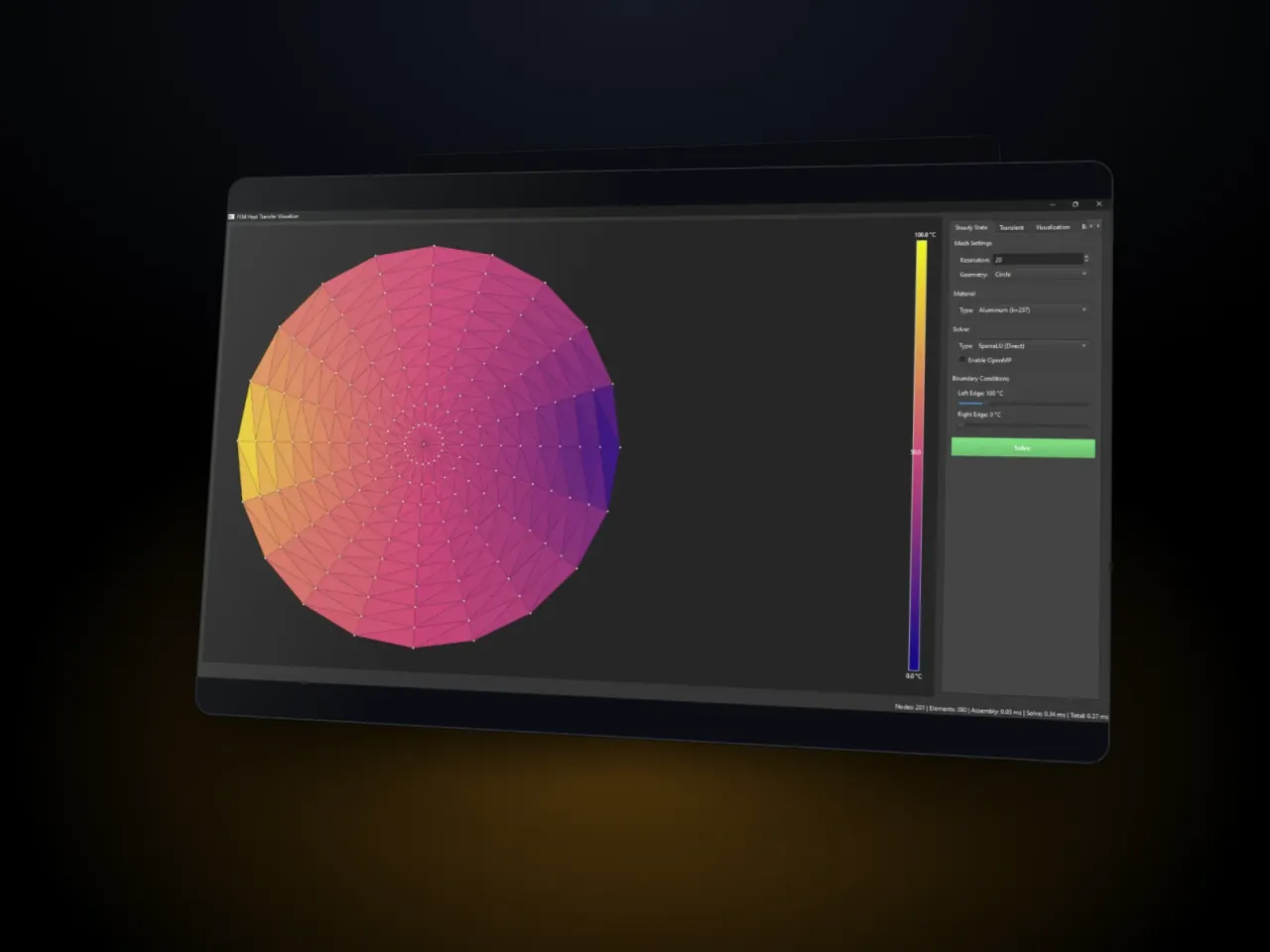
A C++20 finite element solver for 2D steady and transient heat conduction with nonlinear materials, parallel assembly and an interactive Qt interface.

4.2× faster assembly with OpenMP on a quad-core machine for meshes above 5,000 nodes.

View details
LPBF Melt Pool Simulation and ML Surrogate

Scientific Computing2025

LPBF Melt Pool Simulation and ML Surrogate

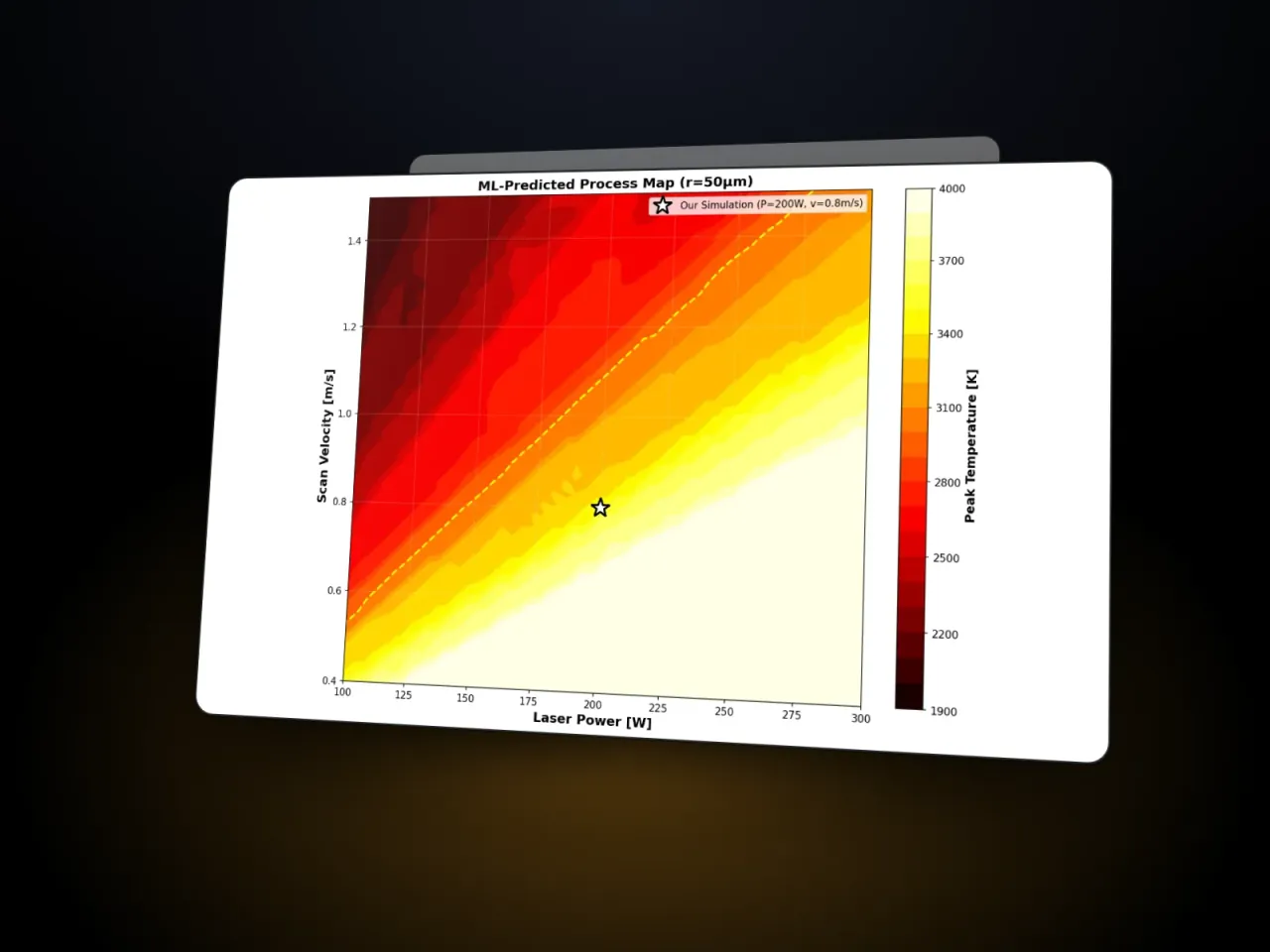
COMSOL models of laser powder bed fusion for Inconel 718, plus a machine-learning surrogate for fast exploration — with its limits stated plainly.

The 3D model predicts a peak temperature of 3,452 K — keyhole regime; the 2D model underestimates it by about 30% and misclassifies the regime.

View details
NUFFT for Two-Electron Repulsion Integrals

Scientific Computing

NUFFT for Two-Electron Repulsion Integrals

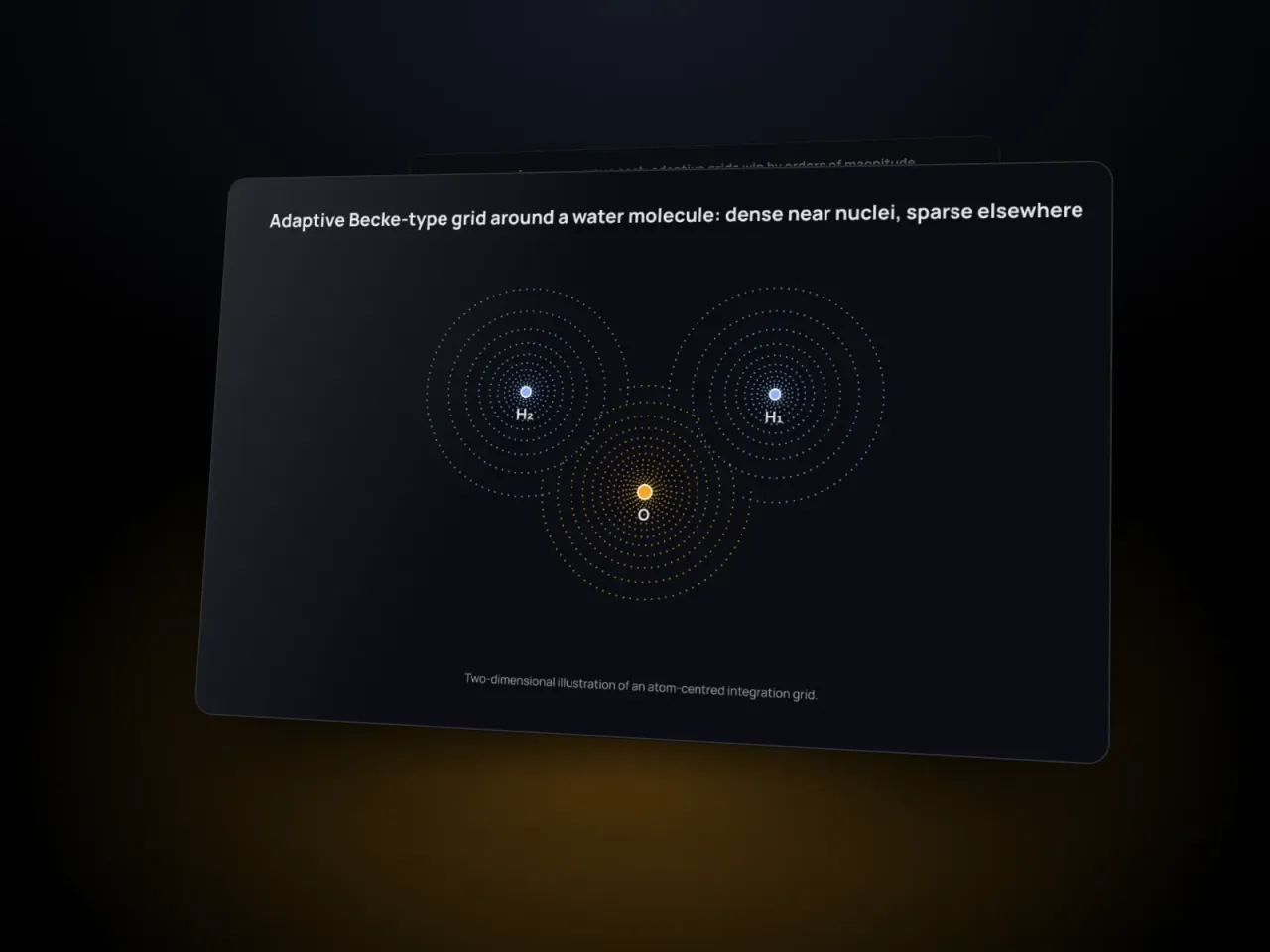
Computing a core quantum-chemistry bottleneck with non-uniform FFTs on adaptive grids — far more accurate with far fewer points.

NUFFT on Becke grids: relative error 4.54 × 10⁻⁶ with 7,760 grid points.

View details

Let’s scope your project

Share what you need. You will receive questions, an approach and a quote — no obligation.